
Key takeaways
- Morocco welcomed a record 19.8 million visitors in 2025, up 14% on the prior year, so booking desert camps early matters (Morocco Ministry of Tourism via AllAfrica, January 2026).
- Marrakech is the most common Sahara launch point, while Fes gives a shorter, quieter route to the Merzouga dunes.
- Erg Chebbi suits a 3-day trip; the remote Erg Chigaga needs 4 days or more because of longer off-road driving.
- Sahara temperatures swing from winter nights near 5°C to summer days of 45°C, so spring and autumn are the easiest times to go (Skyhook Adventure, 2026).
- A private, tailor-made tour lets you set the pace, skip group departures and choose your camp comfort level.
A Morocco desert tour is a multi-day road trip from a city like Marrakech or Fes out to the Sahara, where you ride a camel over the dunes and sleep in a tented camp under the stars. Most trips run 2 to 5 days and combine mountain passes, oasis valleys and a night in the sand. This guide walks you through the main routes, how long you really need, what the camel treks and camps are like, and the right questions to ask before you book.
Morocco is busier than ever. The country welcomed a record 19.8 million visitors in 2025, a 14% rise on the previous year (Morocco Ministry of Tourism, reported by AllAfrica, January 2026). The desert is one of the biggest draws, so the best camps fill up fast in peak months.
What does a Morocco desert tour include?
A typical Morocco desert tour covers transport, a driver or guide, one or more nights in a Sahara camp, and a camel trek over the dunes. Longer itineraries add stops like the Atlas Mountains, Ait Ben Haddou, the Dades and Todra gorges, and palm-filled oasis towns along the way.
The structure is simple. You leave a major city in the morning, drive through changing landscapes with photo stops, and reach the sand in the late afternoon. There you swap the vehicle for a camel, ride into the dunes, and spend the night at camp before returning the next day or continuing deeper.
What varies most is pace and comfort. Shared group tours pack several travelers into one minibus on a fixed schedule. Private tours give you your own car and guide, so you decide when to stop, how long to linger, and where to eat. Operators such as Moroccocameltrips build the whole route around your dates, interests and budget rather than a set departure board.
Where do Sahara tours start: Marrakech, Fes or elsewhere?
Marrakech is the most popular launch point for desert tours in Morocco, followed by Fes, with Tangier and Casablanca used by travelers already in the north. Each hub changes the drive, the scenery and the total time you need.
From Marrakech, the classic route crosses the High Atlas over the Tizi n'Tichka pass, one of the highest paved road crossings in Morocco. The drive to the Erg Chebbi dunes near Merzouga is long, usually a full day of around 8 to 10 hours with stops, so most people split it across the itinerary rather than racing straight out.
From Fes, the road to Merzouga is shorter and quieter, winding through cedar forests and the mid-Atlas before reaching the desert edge. Travelers starting in Tangier or Casablanca generally route south through Fes or Marrakech first, since no desert sits close to those coastal cities.
A common strategy is a one-way loop: start in Marrakech, cross to the Sahara, then finish in Fes (or the reverse). That way you see different country each day instead of backtracking. A private operator can shape this around your arrival and departure airports.
How many days for Erg Chebbi versus Erg Chigaga?
Plan at least 3 days for Erg Chebbi and 4 or more for Erg Chigaga, because the two ergs sit at very different distances and difficulty levels. Erg Chebbi, near Merzouga, is reached on paved roads and is the easier, more accessible of Morocco's two great dune seas.
Erg Chebbi is the postcard Sahara: tall, sweeping dunes that glow orange at sunrise. A 3-day trip from Marrakech or Fes gets you there, into a camp for one night, and back, with the drive broken up by gorges and kasbahs. This is the right choice for most first-time visitors and anyone short on time.
Erg Chigaga, reached from Zagora and M'hamid in the south, is wilder and far less visited. Getting to its camps means a long stretch of off-road driving in a 4×4, which is why a comfortable trip runs 4 days or longer. You trade easy access for silence, bigger open space and almost no crowds.
If your goal is the most dramatic, remote desert and you have the days, Erg Chigaga rewards the effort. If you want the iconic dunes without a rough drive, Erg Chebbi is the practical pick.
What are camel treks and overnight camps really like?
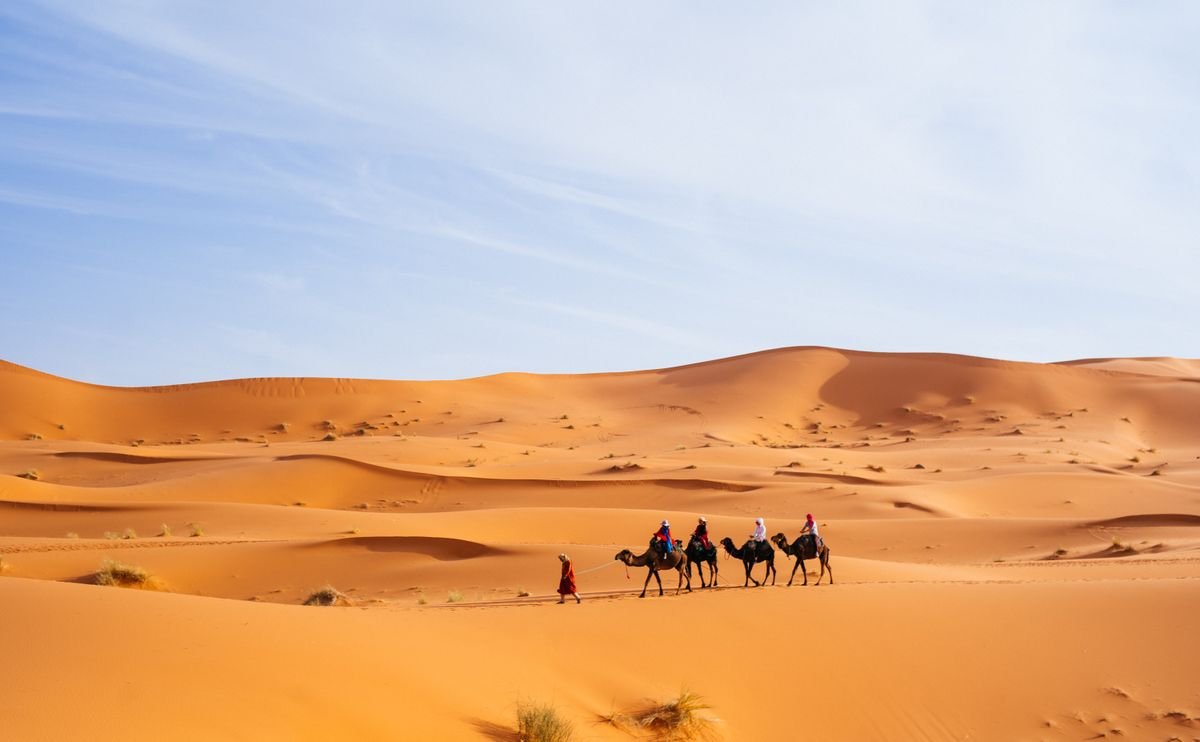
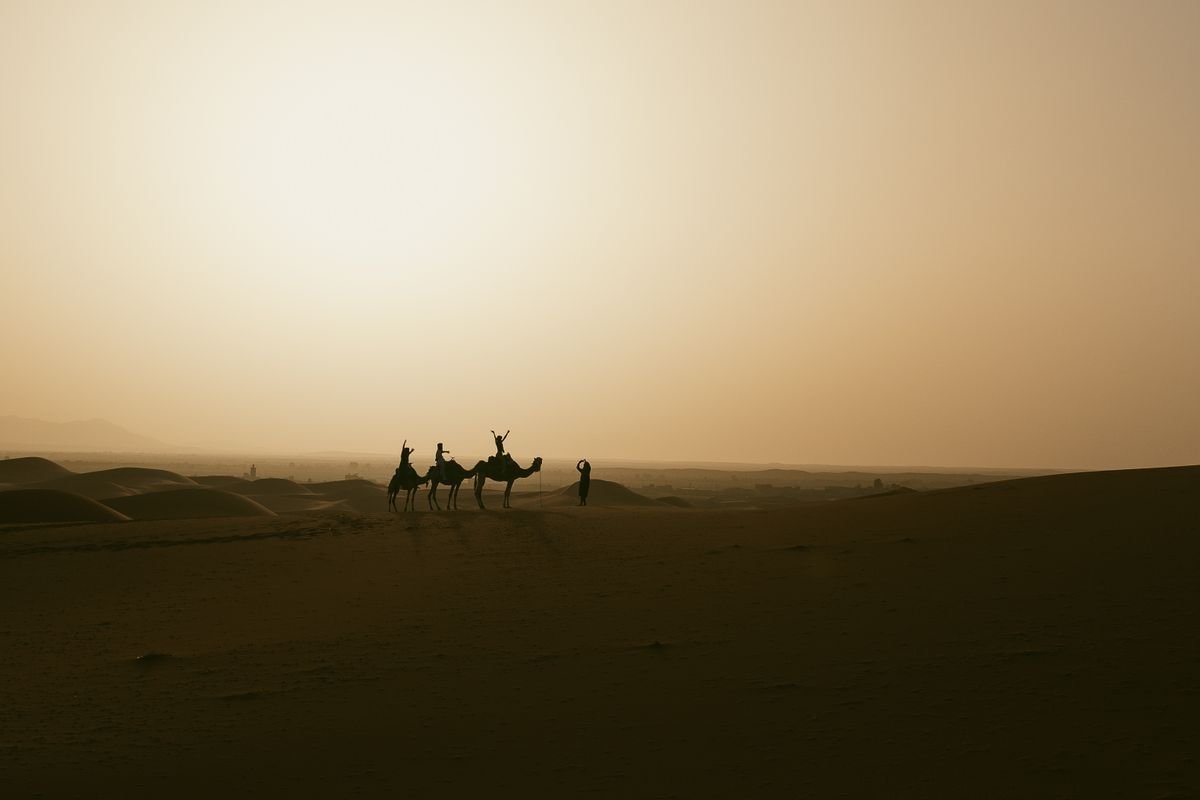
A camel trek is usually a short, slow ride of about an hour from the edge of the dunes into camp, timed for sunset. You sit on a blanketed saddle while a guide leads the camels on foot. It is scenic rather than strenuous, and many camps also offer a 4×4 transfer for anyone who prefers not to ride.
Camps range widely in comfort. Basic camps have simple shared tents and communal toilets. Mid-range camps add private tents with real beds. Luxury camps feel like a desert hotel, with ensuite bathrooms, rugs, lounge areas and proper dining tents. Most trips include dinner, music around a fire, and a wake-up call for sunrise over the sand.
Weather drives when you should go. Sahara temperatures range from winter nights near 5°C to summer days of 45°C (Skyhook Adventure, 2026). Spring and autumn are the most comfortable, with warm days and cool, clear nights that are ideal for stargazing.
Pack layers whatever the season. A warm jacket, a scarf for blowing sand, closed shoes and a headlamp make the night at camp far more pleasant.
How do you book a private, tailor-made trip?
Book a private Morocco desert tour by matching an operator to your dates, then confirming exactly what is and is not included before you pay. The desert is popular, and record tourism numbers mean camps and private guides sell out early in high season, so reserve well ahead for spring and autumn travel.
Sort out the basics first. British nationals, for example, do not need a visa for tourism stays of up to 90 days, though you should always check your own country's current rules on official guidance such as the UK FCDO Morocco entry requirements before you travel.
Before you commit, ask the operator a few direct questions:
- What exactly is included: meals, water, camp category, camel trek and park or site fees?
- Is the vehicle private to my group, and who is my driver or guide?
- What camp comfort level do I get, and can I upgrade?
- How long is each day's drive, and where do we stop?
- What are the deposit, balance and cancellation terms?
A good operator answers plainly and adjusts the route to you. This is where a specialist like Moroccocameltrips fits, building a private itinerary from your home city, your number of nights and the dune sea you want to reach, rather than slotting you into a fixed group departure.
The value of booking private comes down to flexibility. You control the pace, pick your stops, and travel with the same guide the whole way. Strong tourism growth has lifted standards across Morocco: visitor revenue reached about 124 billion dirhams in 2025, up 19% year over year (AllAfrica, January 2026), and competition for your booking keeps camps improving.
Your next step is simple: decide your city, your number of nights and whether you want Erg Chebbi or Erg Chigaga, then send those three details to an operator and ask for a tailored itinerary and a clear, itemized price.
Frequently asked questions
How many days do you need for a Morocco desert tour?
Three days covers Marrakech to the Erg Chebbi dunes near Merzouga with one night in a desert camp. Reaching the remoter Erg Chigaga comfortably takes four days or more because of the longer off-road driving.
Is it better to start a Sahara tour from Marrakech or Fes?
Marrakech has the widest choice of departures and sits near the scenic Tizi n'Tichka pass. Fes offers a shorter, quieter drive to Merzouga, so it suits travelers already in northern Morocco.
What is the best time of year for a Morocco desert tour?
Spring (March to May) and autumn (September to November) are ideal. Summer days can reach 45°C and winter nights can drop near 5°C in the Sahara, so the shoulder seasons are the most comfortable.
What should I expect from an overnight desert camp?
Camps range from basic tents to private suites with real beds, ensuite bathrooms and shared dinners. Most include a camel trek at sunset, a traditional meal, music around the fire and sunrise over the dunes.
Are private Morocco desert tours worth it?
A private tour lets you set your own pace, choose stops, travel with your own guide and driver, and pick your camp comfort level. It costs more than a shared group tour but gives far more flexibility.


