
Key takeaways
- Chefchaouen sits at 564 metres in the Rif Mountains and was founded in 1471, which keeps summers cooler than the Moroccan lowlands.
- The blue walls are most often traced to the Sephardic Jewish community and the tekhelet dye tradition that spread from the old mellah.
- The Spanish Mosque viewpoint is a short uphill walk, while the Akchour waterfalls sit about 28 to 30 km away and make a half-day trip.
- Chefchaouen has no train station, so most visitors arrive by bus or shared taxi from Tangier, Fes or Rabat.
- Morocco recorded 19.8 million tourist arrivals in 2025, so booking rooms and guides early pays off in peak months.
Chefchaouen is a small mountain town in northern Morocco famous for its blue-washed medina, cool Rif Mountains air and slow, walkable streets. This Chefchaouen travel guide covers what to see, the best short hikes, how to arrive from the big cities, and where to eat and sleep for a relaxed stay.
Set at 564 metres in the Rif, the town stays noticeably cooler than Marrakech or Fes in summer. It is compact enough to explore on foot in a day, yet it rewards travellers who linger with quiet courtyards, rooftop cafes and trails that climb straight out of the medina.
Why Chefchaouen's Blue Streets Became a Bucket-List Stop
Chefchaouen was founded in 1471 as a fortress town, and centuries later its painted lanes turned it into one of Morocco's most photographed places. The town grew after 1492, when Muslims and Sephardic Jews expelled from Spain resettled in the Rif and shaped its culture and architecture.
The blue itself has several origin stories, but the most widely cited links it to the Sephardic Jewish community. In the Jewish tekhelet tradition, blue represents the sky and the divine, and the colour is said to have spread from the old mellah, or Jewish quarter, across the wider medina. Other locals credit the blue with keeping walls cool or deterring mosquitoes.
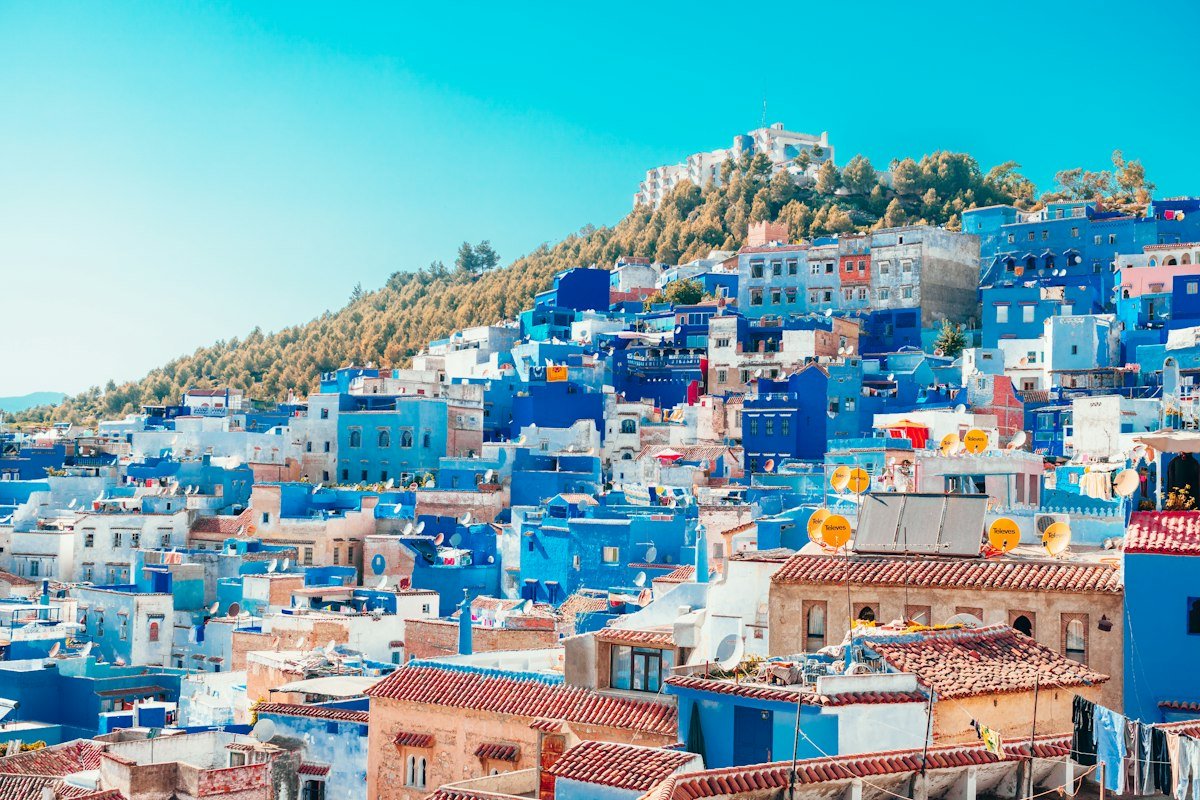
Whatever the true reason, the effect is unmistakable. Indigo doorways, cobalt steps and sky-blue walls sit against the green Rif slopes, and the contrast draws photographers and slow travellers alike. For deeper background on the town's founding and its description as a historic hill town, the entry in Encyclopaedia Britannica is a reliable primary reference.
Top Things to See and Photograph in the Medina
The medina is the main event, and most of it fits inside a morning of easy wandering. The old town is small, roughly 46,000 people live in the wider municipality as of the 2024 census, and the historic core feels more like a village than a city. Start early and the blue lanes are quiet and soft-lit.
Make Plaza Uta el-Hammam your anchor. This shaded square sits at the heart of the medina, lined with cafes and overlooked by the red-walled kasbah and the octagonal minaret of the Grand Mosque. The 15th-century kasbah has a small garden, a modest museum and ramparts with views over the rooftops.
From the square, let yourself get lost. The most striking spots are often unmarked: a staircase draped in potted plants, a doorway in three shades of blue, a cat asleep on a cobalt step. Keep your camera ready and your pace slow. For context on the medina's layout, elevation and history, the Chefchaouen entry on Wikipedia gathers the core facts in one place.
A few photography tips help here. Shoot before 9 a.m. or in the last hour of light, ask before photographing residents, and buy something small if you linger in a shop doorway for a shot.
Best Day Hikes: The Spanish Mosque and Akchour Waterfalls
Two walks bookend most visits. The short one is the climb to the Spanish Mosque, a hilltop viewpoint on the eastern edge of town. The longer one is the Akchour waterfalls, set about 28 to 30 km away in Talassemtane National Park, which fills a relaxed half-day or more.
The Spanish Mosque trail is the easy win. It is a 20 to 30 minute uphill walk from the medina on a clear path, and the reward is a wide view back over the whole blue town against the Rif slopes. Go near sunset for the best light, and carry water even on this short route.
Akchour is the bigger outing. Shared grand taxis reach the trailhead in roughly 45 minutes, and from there a well-trodden path follows the river. The walk to the Grand Cascade runs about 10 to 12 km round trip and takes four to five hours at a steady pace. A shorter branch leads to the natural rock arch known as God's Bridge.
Wear proper shoes, start in the morning, and bring cash for the simple riverside cafes along the trail. If you would rather skip the logistics, a guided day trip from Chefchaouen handles the taxi and the route for you.
How to Get to Chefchaouen from Tangier, Fes and Rabat
Chefchaouen has no train station, so every visitor arrives by road. The two realistic options are intercity buses and shared grand taxis, and the right choice depends on your budget, your group size and how much flexibility you want on timing.
From Tangier, the drive is the shortest, usually around two to two and a half hours. Buses run several times a day, and a grand taxi is faster if you are happy to share or pay for the whole car. Tangier is the most common gateway for travellers flying into northern Morocco.
From Fes, plan on roughly four hours by road, with regular buses connecting the two cities. From Rabat, the journey is longer still, generally four to five hours depending on traffic and stops. Morocco drew 19.8 million tourist arrivals in 2025, a 14 percent rise on the previous year, so popular routes and rooms fill fast in spring and autumn.
For the smoothest trip, many international travellers fold Chefchaouen into a private multi-day route. Operators such as Moroccocameltrips build the town into longer itineraries from Marrakech, Fes, Tangier or Casablanca, which removes the transfer planning and lets you arrive relaxed after a long drive through the Rif foothills.
Where to Eat and Where to Stay for a Relaxed Visit
Chefchaouen rewards a slow pace, and its food and lodging suit that mood. The town is built around small guesthouses and rooftop cafes rather than big resorts, so staying inside or just beside the medina keeps the blue lanes at your doorstep.
For food, stick to the local staples. Plaza Uta el-Hammam and the surrounding lanes serve tagine, harira soup, grilled meats and fresh bread, often on terraces with a medina view. Look for goat cheese from the surrounding Rif hills, a regional specialty, and finish with mint tea at a rooftop table as the walls shift colour at dusk.
For sleeping, a riad or small guesthouse in the medina is the classic choice. These restored houses wrap around interior courtyards and usually include a roof terrace with mountain views. Book early in peak season, since the best-located rooms are limited and demand is high across Morocco.
A relaxed pattern works well: arrive by late afternoon, walk the quiet streets at golden hour, eat slowly, then spend the next morning hiking before the day heats up. If you want to build that rhythm into a wider Morocco trip, plan Chefchaouen as a two-night stop and pair it with the Rif hikes rather than rushing through in an afternoon. The town's heritage, from its founding to its distinctive blue, is well documented in resources like this overview of Chefchaouen's history and Jewish roots, which is worth a read before you go.
Frequently asked questions
How many days do you need in Chefchaouen?
Two nights is the sweet spot. One full day covers the blue medina and the Spanish Mosque, and a second day leaves room for the Akchour waterfalls or a slower morning of photography and cafe stops.
Why are the buildings in Chefchaouen painted blue?
The most widely cited explanation links the blue to the Sephardic Jewish community and the tekhelet dye tradition, where blue symbolises the sky and the divine. The colour spread from the old Jewish quarter across the medina.
Is Chefchaouen worth visiting?
Yes, if you want calm streets, mountain air and some of Morocco's most photogenic lanes. The town is small and walkable, sits at 564 metres for cooler weather, and pairs well with hikes in the surrounding Rif Mountains.
How do you get to Chefchaouen without a car?
There is no train. Buses run from Tangier, Fes and Rabat, and shared grand taxis cover the same routes faster. Many travellers add Chefchaouen to a private multi-day tour to skip the transfers.
When is the best time to visit Chefchaouen?
Spring and autumn offer mild days for walking the medina and hiking to Akchour. Summer is busier and warmer, while winter brings cool, quiet streets and occasional rain in the Rif Mountains.


